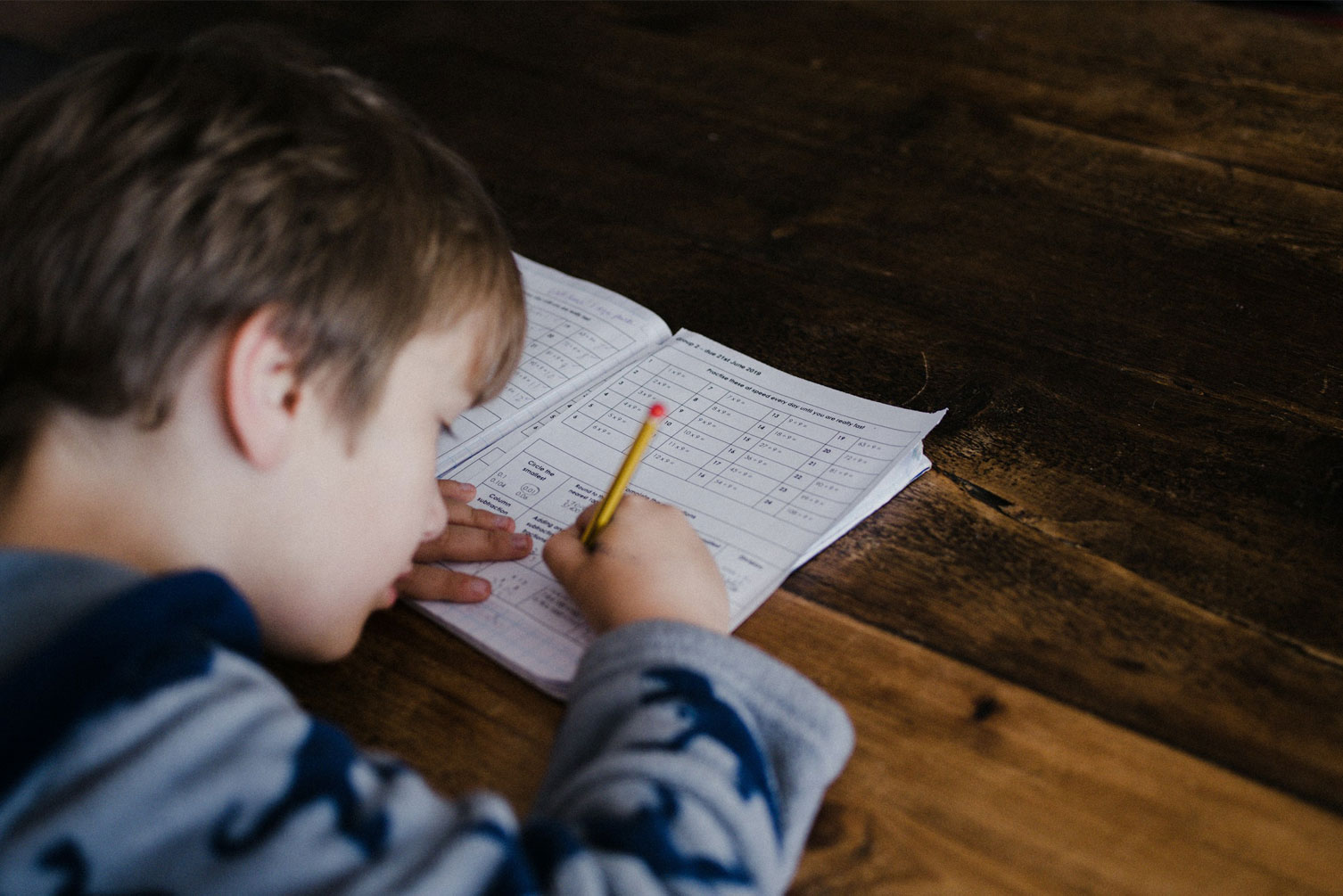
Approximately 1.5% of school aged children in the UK are homeschooled according to the House of Commons Library. Interestingly, data shows an increasing number of parents electing for home education - partly because local authorities are reporting more accurate figures and partly because some families found the experience positive during the pandemic.
But what is homeschooling outside of such a unique situation? How does it work, and is it a recognised form of education in the UK? If you’re exploring this option for your child, we have the answers for you.
Homeschooling is when parents choose to educate their child outside of the traditional school system. Officially known as Elective Home Education, parents are required to deregister their child from the school roll and supply a full-time suitable education for the age and stage of their child at home.
In many cases, this doesn’t mean a full-time education from within the walls of the child’s home. It can also include a combination of parent-led tuition, professional tutors and group-led extra-curricular activities.
In a traditional school setting, a child will be taught in a classroom with other children, traditionally led by one teacher. The school is required to follow the National Curriculum, which is a directive set by the government, for the subjects and benchmark standards a state-funded school must provide for each child.
But it’s not just the school who has to follow regulations. Your child will be required to follow the school rules, wear the school uniform and keep to the school timetable, which includes a set time for the start and the end of the day – things that can be challenging for some students.
While it‘s not a requirement, home-educated children can still gain the same formal qualifications as children in traditional school settings, so long as they’re entered to a recognised exam board as a private candidate.
(H3) Can you homeschool in the UK?If you’ve been researching homeschooling using social media, you might have found that lots of home education content is tailored towards the US audience. This can make it hard to understand what is and isn’t applicable in the UK.
In fact, it’s believed that around 176,000 children are homeschooled in the UK!
For parents who choose this route, there’s no requirement to follow the National Curriculum, meaning you have the flexibility to choose what subjects your child studies.
To help with this, you can access a range of home-schooling programmes to support and direct them throughout the whole journey from primary school through secondary school.
While the council will not supervise the teaching, they do have a legal right to inquire about your child’s provision and progress at home to ensure that homeschooling remains a good fit for them.
One of the biggest benefits of homeschooling is its flexibility, meaning that one child’s experience can look vastly different to another’s.
With no set curriculum, you’re free to choose which areas to focus on, from the core subjects of maths, English and science to other subjects such as IT, art, home economics, finance, dance or drama.
Some subjects may be taught with the help of purpose-built educational resources, such as BBC Bitesize or textbooks bought online. Professional tutors often help to plug the gaps if your own knowledge isn’t as fresh as it once was.
But education can come in all forms, and may include more field trips to museums, zoos or aquariums. Many attractions also provide sessions for home educated students to help support learning.
You could even educate your child about the local area, geography, history and wildlife, for example, through something as simple as a walk!
What’s important to remember is that school isn’t just about curriculum subjects – it’s also about physical activity and social development. These can easily fall by the wayside if you don’t plan for them, but fortunately you can often organise exercise and playdates with other homeschooling families in your local area.
While considering whether home ed is the right direction for your family, it’s important to recognise that this is a full-time commitment. Even though the structure of traditional schooling is removed, your child still needs ample education – which may be difficult to fit around your schedule, especially if both parents work.
With that said, it’s clear that many families in the UK have taken on homeschooling, with plenty finding success and better support for their child’s individual needs. You can find extra support from:
Although homeschooling doesn’t require a uniform, comfortable fitted footwear is still an important requirement for a growing child. If your child is comfortable on their learning journey, that can help them to stay focused and tackle all exciting experiences presented to them.
Start-Rite’s collection of school shoes includes more casual styles that are perfect for all enriching experiences, from classrooms and playgrounds to parks, theatres, zoos and cinemas.
For dance classes or indoor activity sessions, our Start-Rite plimsolls are the perfect partner, and for fun summer playtimes, don’t forget to explore Start-Rite’s washable canvas collection.
Author: Vista, published 20-08-2026.