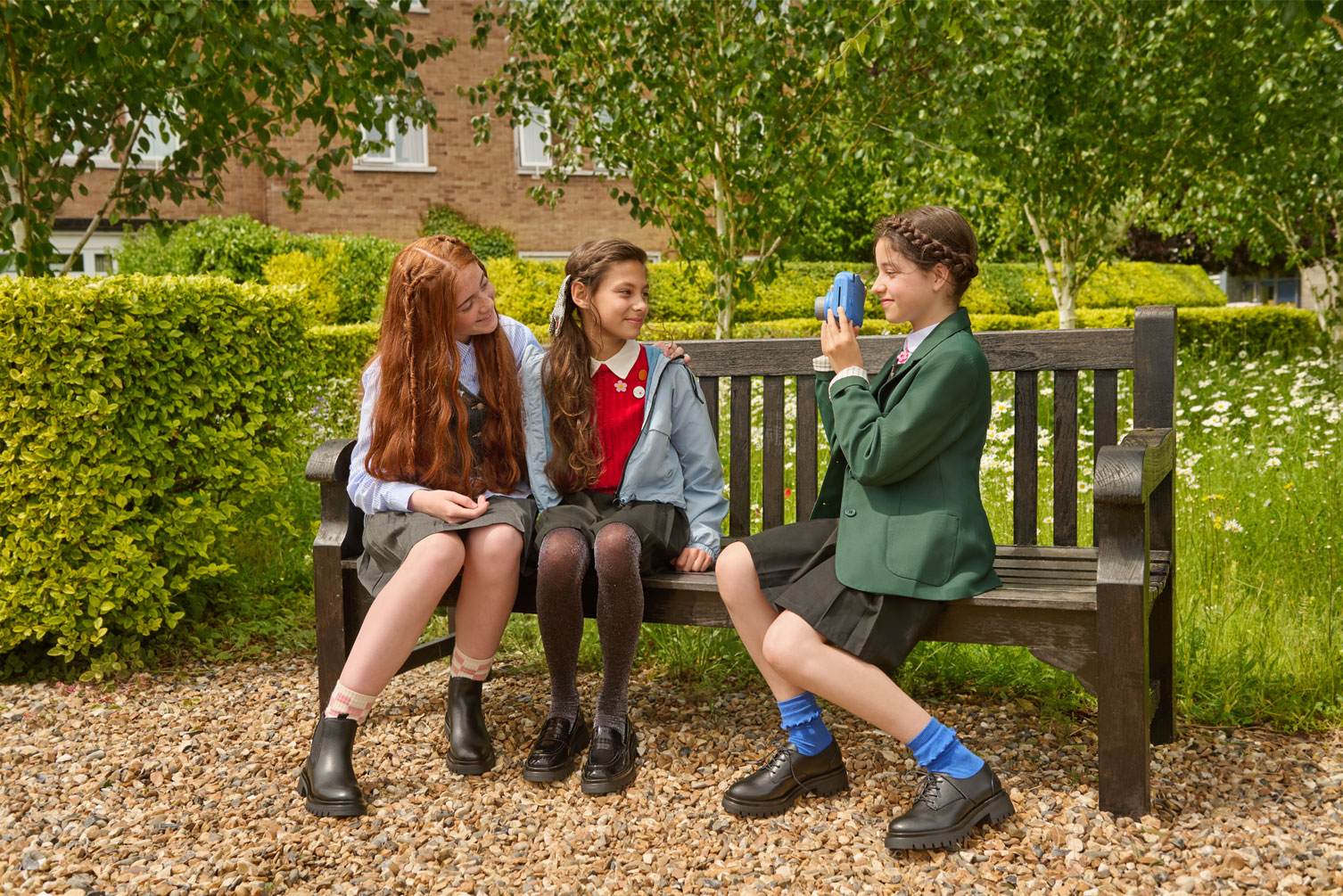
Starting secondary school can feel like a huge step for children and parents alike. The leap to a bigger school, new teachers, new routines and unfamiliar classmates can feel overwhelming, and we know that one of the biggest worries children face is whether they’ll be able to make new friends.
Friendships are incredibly important at this stage. They give children a sense of belonging, help to build their confidence and offer emotional support through the highs and lows of school life.
A strong social circle can make school feel like a place of comfort and joy, rather than stress. But while some children settle in and make connections quickly, others may take a little longer. Remember, this is perfectly normal! Every child finds their path in their own time.
If your child is preparing for secondary school, or has started but is struggling socially, there are lots of ways you can help them to feel more confident and connected. Here are some of our top tips for parents.
A big part of helping your child to feel ready to make friends is removing the little stresses that can chip away at confidence. Being well-prepared for the school day, with the right uniform, equipment and shoes, helps children to feel more at ease and less self-conscious.
Make sure your child has everything they need for their lessons and activities: pens, notebooks, a water bottle, and especially their PE kit.
Since PE often involves playing games or trying new sports in groups, it’s a class where friendships and perceptions can be especially important. If your child is the only one without the right kit, it can leave them feeling embarrassed or singled out from the rest.
Details like this may seem small and unimportant to busy parents, but they can have a real impact on how well your child enjoys their time at school. Ensuring they’re not the only one without a key piece of equipment or uniform helps them to fit in with the rest of the class, which can be a real confidence boost when they’re trying to settle in.
Having comfortable, well-fitting school shoes is essential too. Not only do they need to be able to keep up with busy school days, but great shoes also help your child feel ready to walk tall and make a good impression. After all, it’s hard to have fun and be outgoing if your feet are hurting!
Our high school shoe collection is designed with growing feet in mind, offering both style and support. Don’t forget plimsolls for PE days too - they’re a must-have for fitting in and feeling confident in sports sessions.
Many children find it difficult to start conversations or join in with new groups because they’re not sure what to expect. Practising these situations at home can make it less intimidating when they happen in real life.
You can role-play simple scenarios like saying hello to someone new, asking to sit with a group at lunch or responding to small talk. Use encouraging language and focus on helping your child feel natural and confident with some open questions such as, “What would you do if someone smiled at you in class?” or “How could you ask someone what they thought of the lesson?”
If your child’s a little more shy, they might be self-conscious about conversations like this. In that case, you may find it easier to model behaviours they could use themselves - for example, by waiting a little longer at the school gates to ask similar questions to other parents. You might even make some new friends yourself!
Books, films and TV shows that show characters navigating friendships can also be great conversation starters for shy children. Reading about or watching characters going through similar things can help children to realise they’re not alone, and may give them ideas for handling similar situations themselves.
Extra-curricular activities are one of the best ways to make friends at secondary school. Clubs, sports teams, music groups, drama, art, science or debate teams - they all provide chances for children to bond over shared interests in a more relaxed setting than the classroom.
However, children sometimes need encouragement to get involved. You might need to help with sign-ups, provide a lift, adjust pick-up times or even cover a small cost. The investment is well worth it, not just for friendship opportunities, but for building your child’s self-esteem and sense of identity. Plus, the skills they learn can be helpful in later life.
Ask your child what interests them and explore the options together. They may feel nervous at first, but just showing up is a huge step in the right direction.
It’s important to remind your child, and yourself, that making friends doesn’t always happen overnight. Some children form instant connections, but for others, friendships grow slowly and steadily.
If your child is feeling lonely or disheartened, listen with empathy. Let them talk about their feelings without rushing to fix the problem. Reassure them that lots of other children are feeling the same way, even if they don’t show it, and that friendships often take time to bloom.
Encourage your child to be kind to themselves and to keep making small efforts to connect with others. Even just saying hello to someone new each day is a great start.
Friendship-building doesn’t have to be limited to school hours. Sometimes, it’s easier for children to connect in more relaxed settings.
Look for ways to help your child spend time with potential friends outside of school. This could mean inviting a classmate over for a playdate or movie night, heading to the local park or café after school or joining local sports teams, youth groups or creative clubs.
Even casual meet-ups in your local park can help children to form new connections and feel less isolated. If nothing else, it gives your child more time to practise these skills and feel more confident in themselves. And for shy or anxious children, a familiar environment without academic expectations or pressure may make it easier to open up and bond with others.
Transitioning to secondary school can be emotional, but you don’t have to go it alone. With your love, encouragement and a few practical tools, your child can learn to build meaningful friendships at their own pace.
At Start-Rite, we’ve been supporting children’s steps, both big and small, for generations. Whether it’s finding the perfect school shoes or helping you to prepare for new milestones, we’re here to help you walk this journey together.
Let’s help your child find their footing, and their friends, with confidence and comfort.
Author: Click, published 28-01-2026.