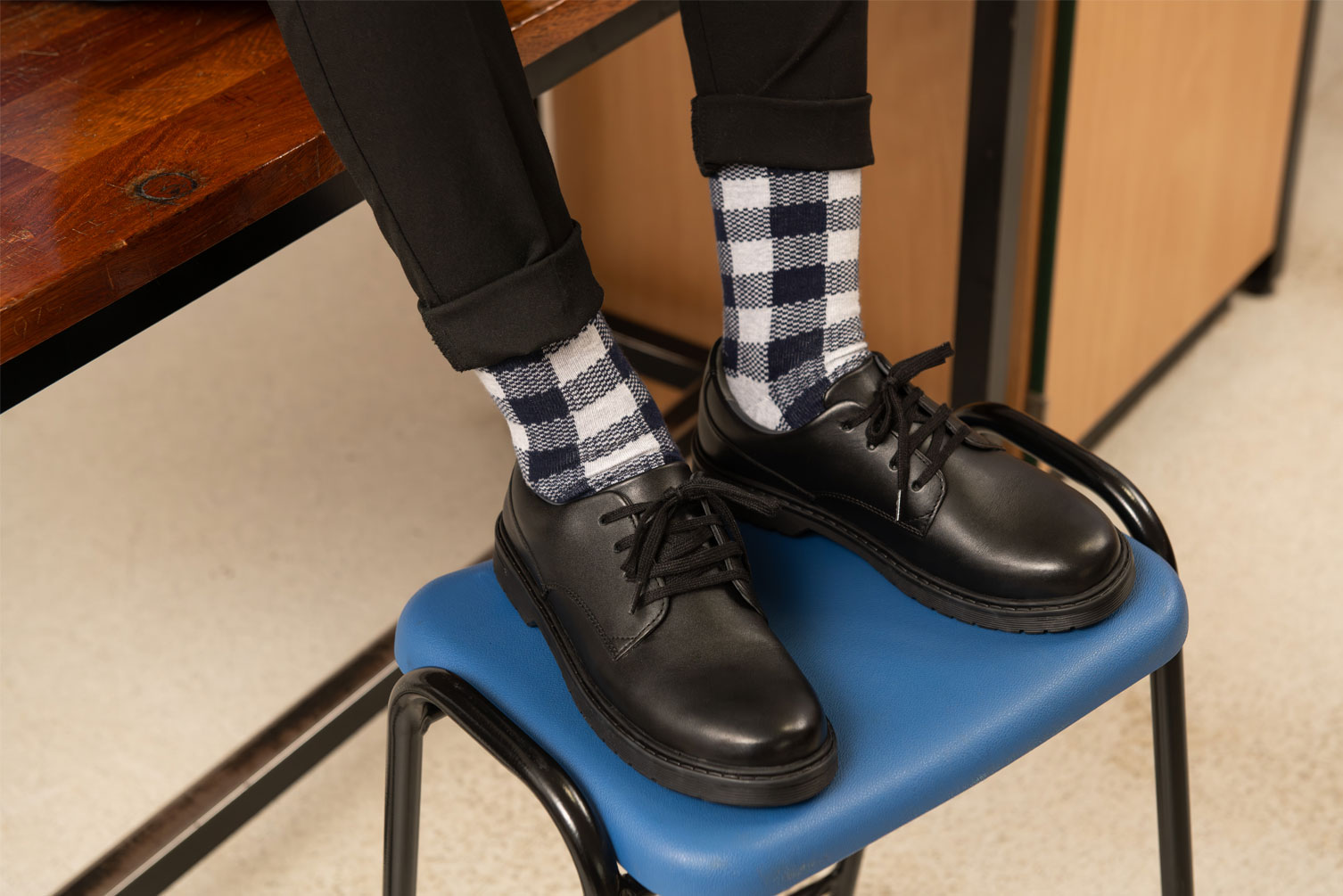
Seeing your child make the leap from rip-tape to laces can be a wonderful thing, especially as they start to gain more independence by learning to tie their laces themselves. Unfortunately, it can be less exciting if you find yourself having to stop every five minutes because those laces keep coming undone.
In this blog, we explore what you can do to help prevent your child’s laces from coming undone frequently. Keep reading to learn more.
It’s not a bad thing for your child’s laces to come undone occasionally - particularly if they’re tying them themself. After all, they’re still learning how to do it well. But if their laces are coming undone so often it’s disrupting your activities, that could be a sign there’s an issue somewhere.
In some cases, there might be a simple fix to help keep your child’s laces tied for longer. Here, we outline some common culprits.
Most of the length of your child’s shoe laces is taken up by the way they’re threaded through the shoe’s eyelets. The rest is usually used in the knots you tie, with a little excess leftover.
However, if there’s too much left over, or if the bows you tie are bigger so they use up more lace, this could actually cause the laces to come undone more often. Your child is likely to stand on the ends of the laces or get them caught on things as they pass, pulling the knots undone.
Luckily, there’s an easy fix. Pull the laces out of the shoe and measure them from end to end. Then, seek out a pair of laces that are a little shorter - taking into account how much excess you were originally dealing with.
Here at Start-Rite, we’re forever talking about the fit of children’s shoes - but that’s because it’s so essential to their development and overall wellbeing! Fit can even affect how well their shoe laces hold in place.
If your child’s shoes are too small, it can place undue pressure on whatever is holding the shoe closed, whether that’s rip-tape, a buckle or, in this case, laces. This can cause knots to slip, allowing the laces to come untied more often than you’d like.
This, too, has a simple fix - just measure your child’s feet to check the right size for their shoes. If it’s not the size they’re currently wearing, it’s time to get a new pair.
Occasionally, the problem can lie not in the laces or shoes but in the dirt on them. If your child has been playing in mud or puddles, there could be residue on the laces that is causing them to be more slippery than usual - and this could prevent knots from holding for very long.
Caked-on dirt can also be a problem. Dried-on mud or debris that’s stuck to the laces can affect how tightly you can knot them, meaning the laces may come undone more easily.
If you think this might be the case, try:
If your child’s shoe laces keep coming undone after these measures, the problem may be related to how the laces are tied. This is especially likely if:
This issue may take a little longer to fix, as it takes time for your child to perfect the fine motor skills involved in lace-tying.
However, if the problem persists when you tie your child’s shoes, you may benefit from brushing up on your own technique. There are two common knots - the granny knot and the reef knot - which are made in similar ways and look almost identical, yet have very different effects in action.
A granny knot is where the bows or loops of the laces lie askew, so one lies higher than the other. A reef knot, on the other hand, leaves the loops roughly horizontal and symmetrical - and is much stronger against the forces generated by walking.
To tie a reef knot, you should:
Tying laces is learned so early in our lives we often don’t think to revisit how we do it. But doing just that could be the answer you’re looking for.
Not all laces are equal. Some are narrow, round and smooth - such as those found on hiking boots or some styles of school shoes. Others have a flatter, wider design.
If you or your child are having trouble with one type of laces and not the other, then the simplest solution is to switch to the other type to see if that helps.
Most commonly, this means switching from the round, smooth laces to the wider ones. That’s because the latter tend to have a slightly rougher feel to them that increases the friction involved in knots, helping them to hold.
Wider laces can also be easier for little fingers to manage - particularly as the smooth laces can sometimes feel a little stiff on new shoes. Your child may need to learn to tie laces with the wider, flatter style before they can graduate to the smoother alternative.
Lots of things can affect how well your child’s laces stay tied, and sometimes there’s a simple change you can make to avoid having to keep stopping and retying them. Whether your child is just learning or has been tying their laces for years, there’s often a quick fix for loose laces.
Author: Click, published 16-06-2026.