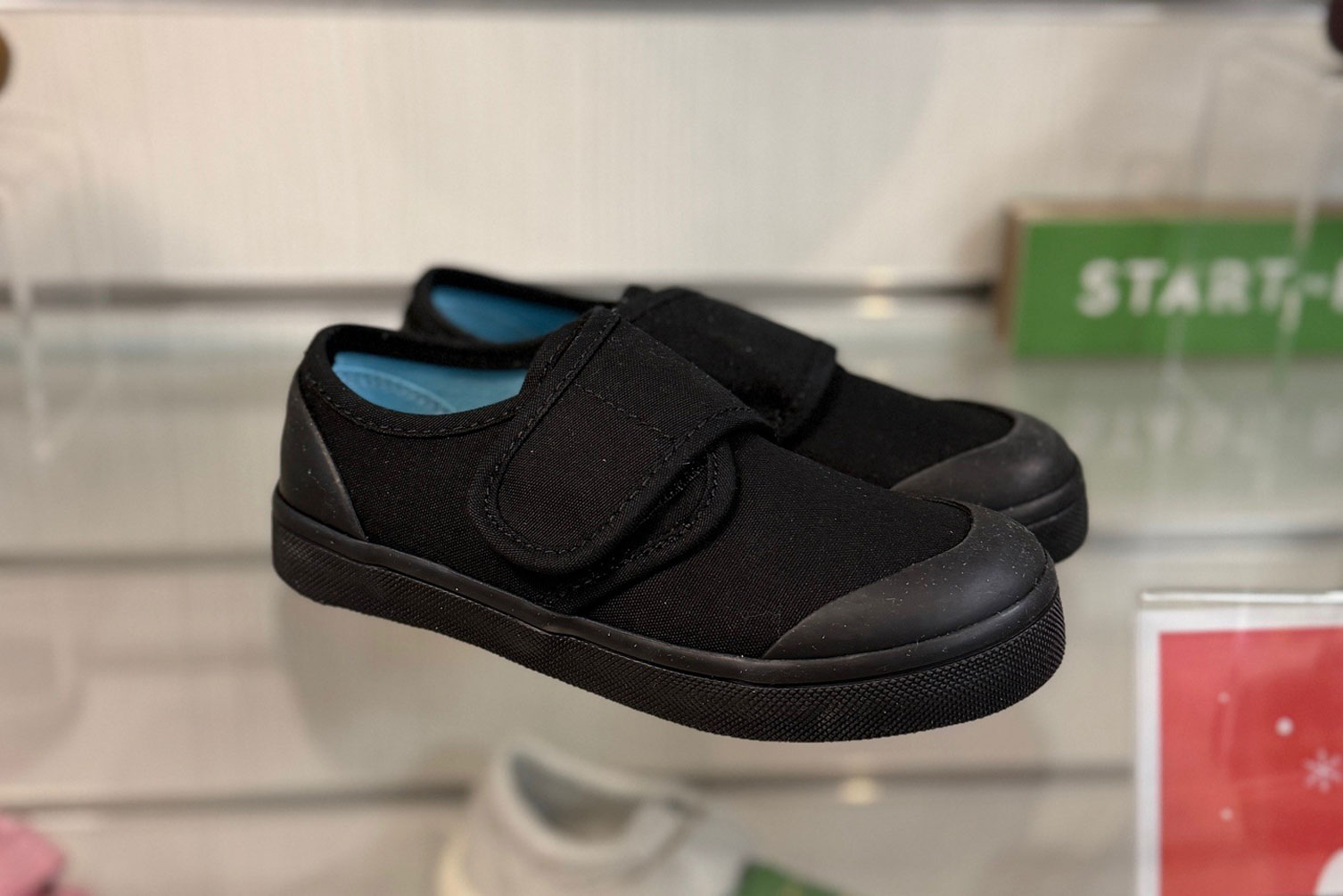
Keeping children’s plimsolls clean does far more than keep them looking smart. Fresh, well-cared-for footwear helps to support good foot health and everyday hygiene - especially important for shoes designed for energetic movement.
As specialists in properly fitted children’s footwear, we know just how much a pair of hard-working plimsolls can go through. From PE lessons indoors and out to after-school activities, these lightweight favourites see plenty of action, which means sweat, dirt and inevitable odours can build up quickly.
In this guide, we explain exactly how to wash plimsolls safely so they stay supportive, comfortable and ready for action.
Hand washing is the safest and most effective way to refresh plimsolls without compromising their structure. The good news is, it’s straightforward, and with a few simple steps, you can keep them looking bright - and smelling considerably sweeter!
Step 1 - Prepare the shoes
Start by removing the insoles if they are detachable. Then, either unfasten the rip-tape, or, if your child’s plimsolls have laces, remove these too.
Give the shoes a quick brush to get rid of loose dirt, paying special attention to the grooves around the rubber toe cap and sole.
Step 2 - Make up a cleaning solution
Fill a bowl or sink with warm - but not hot - water and add a mild laundry detergent. Strong detergents may be tempting when tackling stubborn marks, but gentler formulas protect the canvas and rubber from unnecessary wear.
Step 3 - Gently wipe dirt from the plimsolls
Dip a soft cloth or sponge into the soapy water and work it across the surface of the plimsolls in small circular motions.
Got a more stubborn patch? A soft-bristled brush (even an old toothbrush) offers a bit more power without the risk of damage.
Step 4 - Remove soap residue
Once the plimsolls are clean, rinse them using a cloth dampened with fresh water rather than holding the shoes directly under the tap. This helps to avoid over-soaking the fabric, which can lead to slower drying times.
Step 5 - Optional extras
-Rip-tape
If your child’s plimsolls feature an easy rip-tape fastening, like our Skip plimsolls do, it’s worth giving this a quick tidy as well. Rip-tape can sometimes catch small bits of fluff or the odd strand of grass, especially after a lively outdoor PE session, and this can make the fastening less effective over time.
A gentle once-over with a dry toothbrush should lift out anything caught in the teeth of the rip-tape without damaging the fibres. Avoid soaking the rip-tape directly - light cleaning is all it needs to stay fresh and secure.
- Laces and elastic inserts
To keep your child’s plimsolls looking their best, laces and elastic inserts can be refreshed too. Laces can simply be swished in warm, soapy water, rinsed and left to air-dry flat - though particularly muddy laces may need a longer soaking.
As for elastic trims, these features benefit from a simple wipe with a damp cloth to help them keep their stretch and shape. A few extra minutes spent here keeps every part of the shoe looking neat and working just as it should.
It’s a tempting shortcut to pop plimsolls in with the weekly wash to keep things convenient, but machine washing can be surprisingly harsh on this type of shoe.
The tumbling motion can bend, twist and strain the plimsoll’s structure, especially the rubber sole and toe cap, while high temperatures increase the risk further by softening the rubber, causing it to lose its shape and vital supportive properties. Over time, this can lead to soles separating, misshaping or becoming less stable on the foot.
That’s why we strongly recommend sticking to hand washing plimsolls. It’s quick, effective, can be more targeted for spot cleans and is far gentler - perfect for giving the shoes a refresh after energetic PE lessons.
Best of all, you don’t have to wait for a machine cycle to finish. A speedy hand wash means plimsolls can be cleaned as soon as needed, reducing lingering smells and keeping the canvas brighter for longer.
Looking for canvas styles that can be machine washed? Check out our Wriggles collection - ideal for little ones who love muddy play!
Once washed, plimsolls dry best when treated with patience. Start by gently pressing a clean towel inside the shoes to absorb excess water. Avoid wringing or twisting the plimsolls, as this can distort both the canvas and the sole.
After the excess moisture has been removed, leave them to air-dry naturally in a warm, well-ventilated spot. Avoid direct heat from radiators, tumble dryers or heaters, which can cause rubber to warp or crack, shortening the life of the shoe.
That said, during winter, drying indoors can still be effective. Place the plimsolls near (but not on top of) a radiator or drying rack, allowing airflow around them. Stuffing them loosely with newspaper can help to draw out moisture quicker and maintain the shape of the shoe.
In summer, drying outdoors is ideal. Sunlight can help break down lingering odours, and the gentle warmth naturally speeds up drying time. Just avoid leaving them in harsh, direct sun for too long, as UV rays can fade colours over time.
Once your child’s plimsolls are dry, re-insert the insoles and lace them up. They should feel fresh, supportive and ready for another race around the playground or gym hall - just as a trusted pair of plimsolls should.
Keeping plimsolls clean is an easy habit that supports good foot health and hygiene while helping shoes last longer. Now that you know how to wash plimsolls safely and effectively, explore our latest collections to find the perfect pair for every active moment.
Author: Click, published 29-01-2026.