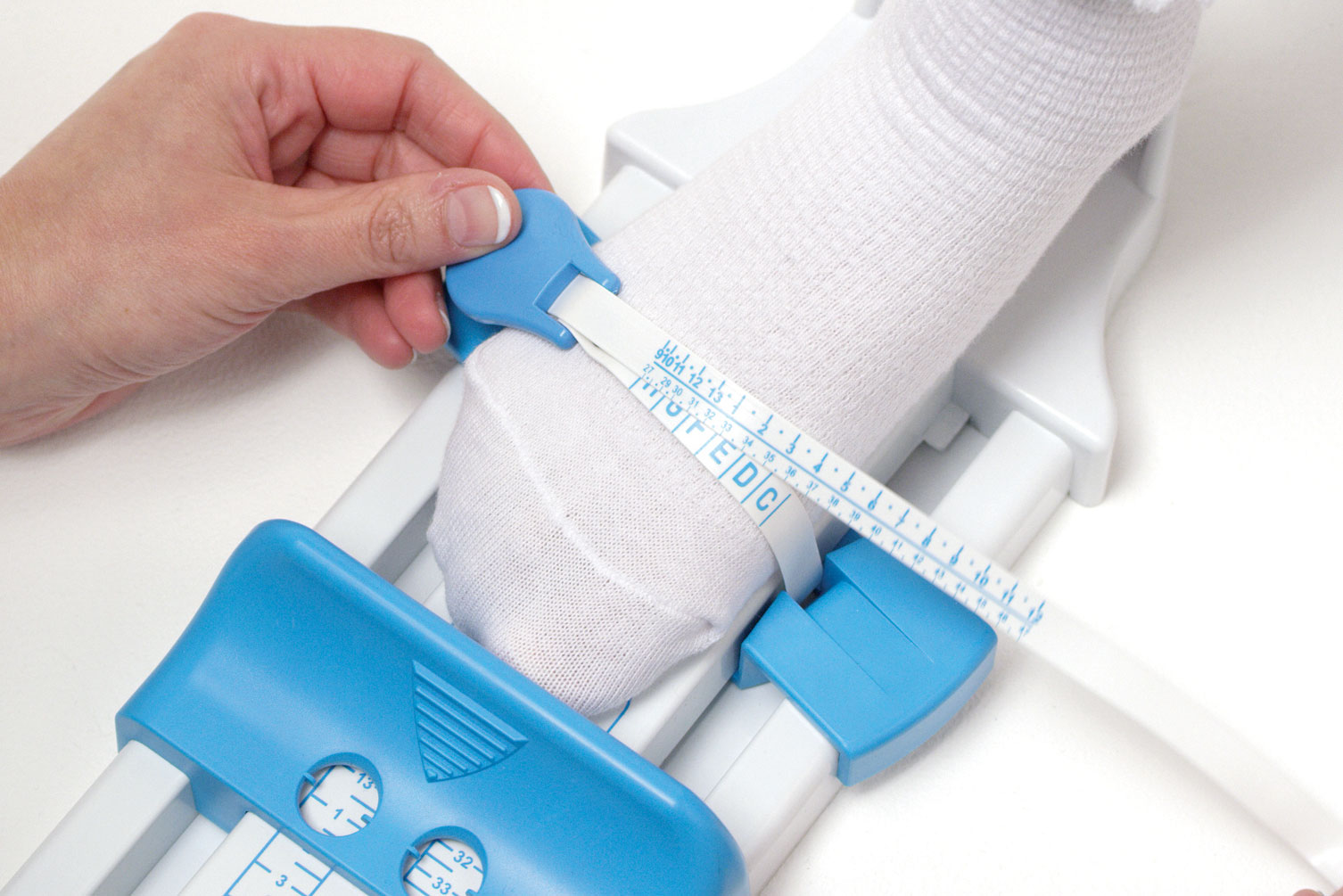
Here at Start-Rite, we’re always saying that getting the right fit for your little one’s shoes is the most important thing when it comes to buying a new pair. That’s why we offer advice and assistance with measuring, including tools like our partner SizeWise’s digital measuring tool.
But what happens when sizing isn’t quite as simple as we’d like it to be? Children’s feet don’t always fit conveniently into the middle of size ranges - so what should you do when they’re on the cusp of two sizes, or if their left foot is a different size to the right one?
In this blog, we discuss these sizing challenges to help you make the right choice for your child’s growth and development. Keep reading for our advice.
When you measure your child’s feet and compare the results to a sizing guide, you’ll likely be confronted with measurement ranges for each size. You might see something like this: 184 to 187mm = Child’s size 12.
While these exact figures may vary slightly between manufacturers, they’re a good way to compare your child’s foot size to the sizes used by that retailer so you can get a better fit.
The problem is, children’s feet grow quickly, and it’s understandable that parents want to get the most wear possible out of new shoes. If your child has, for example, feet that are 187mm long, it can be tempting to buy the next size (or half-size) up so the shoes last longer before they outgrow them - but is this wise?
Generally speaking, this is the point at which it can be really handy to get an in-person fitting, as a professional fitter can handle these queries for you and assist you in making the best choice for your child’s feet. However, there are a few pointers to consider that may help you to get the right fit at home:
As a final rule of thumb, remember that at Start-Rite, all of our shoes are designed with growing room built in. This means that, even if your child’s feet are right at the high end of the size bracket, they should still get plenty of wear out of their shoes before needing to move to the next size.
Did you know that most people, children and adults included, have one foot that’s a little larger than the other? In most of us, the difference is so small as to be hardly noticeable, but in some, it can mean that finding the right fit in shoes takes a little extra consideration.
This is one of the reasons why it’s so important to measure both feet and not just one - because they might not be the same. Similarly, when trying on shoes for the first time, it’s best to put both feet into the shoes and have a walk around to check the fit.
In situations like this, where one of your child’s feet is slightly bigger than the other, the best option is to choose shoes in the larger size. This helps to avoid problems of cramped toes or rubbing on the heels.
But that’s not all. Some shoes are designed with this very situation in mind, which is why many of our most popular Start-Rite styles come with Dual Fit technology. These insoles can be removed to adjust the fit of each shoe individually - so it’s simple to support different-sized feet.
Your little one’s feet might not be the easiest to shop for, but that doesn’t mean you can’t get a great fit. Browse our range of styles today to find one ideal for your child - and if you have any concerns about fit, speak to a professional fitter for tailored advice.
Author: Click, published 13-08-2026.