Walking to school is one of the simplest ways to build healthy habits into your child's daily routine. From boosting physical activity and supporting wellbeing, to developing independence and essential road safety skills, the journey to school offers far more than just a way to get from A to B.
Whether your child walks, scoots or cycles their way to school, making active travel part of the school run can have lasting benefits for children, families, communities and the environment. In this guide, we'll explore why walking to school matters, how to help children stay safe near roads, and practical tips for making the journey enjoyable for the whole family.
Walking to school provides children with an easy opportunity to build movement into their day. With many young people falling short of the recommended daily activity levels, the school run can play an important role in helping children stay active.
Regular walking helps children build strength, stamina and healthy habits that can last a lifetime. Even short walks contribute towards daily physical activity and encourage children to spend more time moving rather than travelling by car.
Physical activity releases endorphins, which can help improve mood, reduce stress and increase energy levels. Many children arrive at school feeling more awake, focused and ready for the day after an active journey.
Walking encourages children to notice the world around them. From changing seasons and local wildlife to familiar faces and community landmarks, the journey can help children feel more connected to their surroundings.
The walk to school provides valuable opportunities to chat, share stories and spend uninterrupted time together. For many families, these moments become an important part of the daily routine.
Choosing active travel over car journeys, even for part of the route, can make a positive difference in reducing congestion and air pollution around schools.
Swapping car journeys for walking can help families cut down on fuel and other travel costs. Even walking part of the journey by parking a little further from school can add up to meaningful savings over the school year.
If walking the entire journey isn't practical, scooting can be another great way to travel actively.
Scooting offers many of the same benefits as walking while helping children build confidence and independence.

Scooting can support:
These developmental skills benefit children both in the classroom and during play.
Travelling using their own effort helps children build confidence and develop problem-solving skills as they navigate their route safely.
Many children see scooting as an exciting activity rather than exercise, making it a great way to encourage movement as part of everyday life.
Many of our tough school shoes feature toe and heel bumpers, which are great for minimising scuffing if your child spends plenty of time on their scooter (we all know they love to use their feet as brakes!).
One of the often-overlooked benefits of walking to school is the opportunity to teach road safety in real-life situations. Learning how to stay safe near roads helps children develop awareness, decision-making skills and confidence that will serve them throughout life.
Road safety isn’t just about drivers following rules; it’s a shared responsibility among everyone who uses or interacts with roads. This includes pedestrians, cyclists, and even those waiting near roadsides like at a bus stop or school gate. The increased number of children on the road during school pick-up and drop-off times amplifies the need for vigilance.
Research by Brake highlights the dangers children face near roads. For instance, areas with a 20mph speed limit have been proven to significantly reduce accidents, especially during the busy school run. When vehicles travel faster than this, the risk of severe injury to children rises dramatically. Statistics show that a child hit by a car at 30mph is five times more likely to be fatally injured than if they are hit at 20mph.
These numbers show why it’s so important to teach children not just to be safe pedestrians, but also to understand road safety in context. With accidents spiking during peak school hours, awareness and education are essential.
Road safety education helps children:
These skills extend beyond roads and can help children assess risks in many other areas of life.
One of the most important road safety lessons for children is the simple:
Practising this sequence regularly during the school run helps turn it into a lifelong habit.

Do:
Start early and set good habits
It’s never too early to start talking about road safety with your child. As soon as your child begins walking, you can introduce them to basic concepts like staying on the pavement and walking on the side farthest from traffic. Teaching them to stop at the kerb, hold hands and wait for an adult before crossing the road are foundational lessons that will benefit them for years to come.
Use designated crossing points wherever possible
Make it a habit to cross at designated pedestrian crossings, such as zebra crossings or traffic light-controlled crossings, where drivers are more likely to stop. These locations are safer, and drivers are more aware of pedestrians. Explain how to use these crossings properly, waiting for the green man or ensuring cars come to a complete stop before stepping out.
Make road safety fun and interactive
Road safety doesn’t have to be a boring subject, turning lessons into games can make learning more engaging. For instance, let your child be responsible for pressing the button at pedestrian crossings, or play games like counting the number of red or green lights. These little activities help them stay focused and excited about following the rules.
Interactive learning helps reinforce good habits, making it more likely that they’ll remember what you’ve taught them when they’re walking to school or other activities.
Wear bright or reflective clothing
Especially during the winter months, visibility is key. When it’s dark or cloudy, children can be harder to spot by drivers. Make sure your child wears bright, reflective clothing or backpacks. Remind them why being visible is crucial for their safety, especially when crossing roads or walking along streets with limited lighting.
Clothing and backpacks aren’t the only options to help your child stay visible in low light conditions. Choosing school shoes that feature reflective panels, such as our boys’ Strike style, means your little ones will be that much easier to see when walking to and from school in the darker months.
Lead by example and demonstrate safe behaviour
Children learn road safety by watching you. Set a positive example by always using pedestrian crossings, following the 'Stop, Look, Listen, and Think' rule, and staying alert near traffic. By practising these safe habits, you help your child develop the same awareness.
Don't:
Cross between parked cars
One of the riskiest places to cross is between parked cars, where drivers may not see pedestrians until it is too late. Teach your child to avoid these spots and opt for open spaces or designated crossings where they can clearly see oncoming traffic.
Rush across the road
Even when it seems like there’s no traffic, teach your child that rushing across roads is dangerous. Speeding to beat an oncoming car or running across to catch up with friends can result in accidents. Encourage them to take their time, ensuring the road is clear before crossing.
Assume children understand road dangers without guidance
Children are naturally curious, but they don’t have the developed sense of danger that adults do. Don’t assume they’ll understand the risks associated with roads, cars and crossings without clear explanations and hands-on guidance. Take the time to point out potential dangers, such as cars pulling out of driveways or cyclists moving quickly through pedestrian zones.
Become distracted near traffic
Teach your child the dangers of being distracted by phones, toys or even conversations while walking near roads. Explain the importance of staying alert and keeping their focus on the traffic around them. Encouraging them to look up and pay attention can prevent accidents caused by distractions.
Clothing and backpacks aren’t the only options to help your child stay visible in low light conditions. Choosing school shoes that feature reflective panels, such as our boys’ Strike style, means your little ones will be that much easier to see when walking to and from school in the darker months.
Allow hoods, clothing or headphones to obstruct vision or hearing
Children learn road safety by watching you. Set a positive example by always using pedestrian crossings, following the 'Stop, Look, Listen, and Think' rule, and staying alert near traffic. By practising these safe habits, you help your child develop the same awareness. When children are near roads, it's important that they can clearly see and hear what's happening around them. Large hoods, bulky scarves and headphones can make it harder to spot approaching vehicles or hear important sounds such as traffic, bicycle bells or emergency sirens. Encourage children to lower hoods, remove headphones and stay fully aware of their surroundings before crossing, helping them make safer decisions and react more quickly to potential hazards.
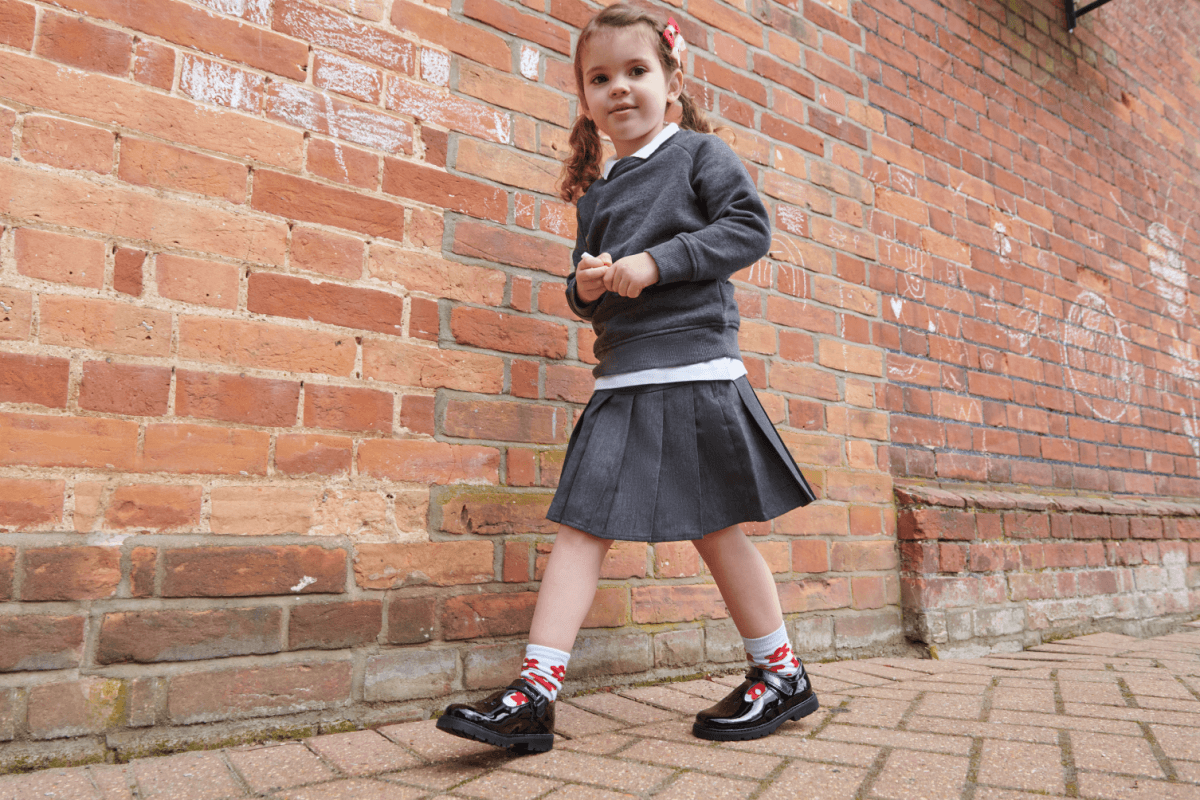
There is no official age at which a child can safely walk to school independently.
Readiness depends on factors including:
Parents and carers are best placed to assess whether their child is ready - before allowing independent journeys, children should demonstrate consistent road safety awareness and confidence in handling everyday situations safely.
Make learning about road safety an engaging experience. Quiz your children on the “Stop, Look, Listen, Think” sequence and turn it into a game while out for a walk. Ask them to point out safe crossing points, potential hazards or what different traffic lights and signs mean.
Practise in familiar and unfamiliar settings to truly embed the message. While it's crucial to practise lessons on roads your child uses daily, introducing them to different road types, environments and times of day they might encounter, such as those on holidays or special trips, provide a more robust and comprehensive learning experience.
While you’re putting their knowledge and understanding to the test, start to bring in other road safety tips, for example:
If walking isn't already part of your routine, making the change doesn't need to happen overnight.
Build confidence by walking shorter distances before tackling the full route.
Walk the route together beforehand and identify any potential hazards.
Joining other families can make the journey more enjoyable and encourage children to look forward to it.
If you live too far away to walk the entire journey, parking further from school and walking the final section still provides many benefits.
Games such as ‘I Spy’, or spotting wildlife and seasonal changes can help keep younger children engaged.
Comfortable, supportive footwear and weather-appropriate clothing help ensure the journey remains enjoyable all year round. Our school shoes are designed to support growing feet with flexible soles, cushioned comfort and durable materials that can handle busy school days and active journeys. Explore our collection of girls school shoes and boys school shoes to find the perfect pair for the walk to school and beyond. Learn more about what makes a children’s shoe suitable for walking here.
Throughout the year, initiatives such as the national Walk to School Week in May and International Walk to School Month in October encourage families to swap car journeys for active travel where possible.
These events celebrate the benefits of walking, cycling and scooting while helping children develop healthy habits, improve road safety awareness and reduce congestion around schools.
Even taking part for a few days can help families discover how enjoyable active school journeys can be!

Walking, scooting or wheeling to school offers far more than a way to reach the classroom. It helps children build confidence, develop road safety skills, stay active, connect with their community and establish healthy habits that can last a lifetime.
Whether you're walking the whole route or simply adding a few minutes of active travel to your school run, every step counts towards creating a healthier, safer and more enjoyable journey to school.