We’ve always believed that the best thing for little feet is the freedom to grow and move as nature intended. It’s a simple idea, but one that’s shaped how we design children’s shoes for over two centuries.
From those first early movements through to confident steps, children learn by exploring. Their feet help them balance, stabilise and build strength along the way - so it makes sense to start with this in mind when designing shoes.
While going completely barefoot isn’t always practical in modern life, the benefits of it are something we’ve always held onto. Our approach is about capturing that same sense of freedom, while making sure little feet are comfortable and cared for through everyday adventures.
It’s about nurturing and protecting developing feet.
Barefoot shoes are designed to feel as close to actually being barefoot as possible, while still offering protection from the world beneath little feet.
Rather than holding the foot in place or restricting movement, they’re created to allow feet to move, flex and respond freely. The focus is on working with the body rather than correcting or shaping it.
Typically, this means shoes that are shaped to follow the natural outline of the foot, flexible enough to move easily, light in weight, and designed to give toes the space they need to spread.
In the early years especially, this makes a real difference as feet are still forming, muscles are developing, and balance is being learned step by step. Shoes that allow movement and provide maximum sensory feedback from the ground can help aid this important stage in a gentle, supportive way.
With years of expertise and research poured in, our baby and toddler shoes are carefully crafted to support growing feet, offering the perfect balance of protection, comfort, and flexibility to help your child start walking confidently.
The earliest years of a child’s life are an incredible period of physical development. Feet, legs and posture develop through repeated movement, exploration and play – both indoors and outdoors.
Barefoot friendly shoes help support this development by encouraging strong, healthy feet, enabling sensory feedback from the ground, allowing muscles to develop naturally, and helping children to build balance and coordination.
Our baby and toddler shoes are designed to be part of this journey, supporting children from first crawls to confident steps, and every milestone in between.
Barefoot walking offers incredible benefits, but shoes are often necessary - and that’s okay.
Our philosophy has never been about choosing one over the other. It’s about designing footwear that honours barefoot principles while recognising the realities of modern life: shoes that feel comfortable from the very first wear while offering support, protection and durability.
From nursery days to outdoor adventures and early explorations, our barefoot friendly designs are made to support growing feet wherever life takes them.
As awareness of barefoot footwear grows, so does the importance of choosing shoes that genuinely support healthy development. Look for styles that prioritise shape, flexibility, lightweight construction and a wide toe area - with adequate protection that will stand up to everyday life.
Our growing barefoot friendly selection brings together many of the features parents value most, making it easier to choose shoes that support natural movement without compromising on comfort or quality.

Children’s feet are very different to adult feet. They’re softer, more flexible, and still developing in both shape and strength. That’s why the right shoe can make such a difference.
Shoes designed with barefoot principles in mind can help support how children move and grow. By allowing feet to function more freely, they can encourage better balance, improved coordination and stronger foot development over time.
They also allow toes to move and spread as they should, creating a more stable base for standing and walking. And because they’re typically lighter and more flexible, they can make movement feel easier and more natural, especially for little ones who are still building confidence on their feet.
While no shoe replaces being barefoot completely, the right design can come close - supporting children as they explore, play, and take on each new stage of movement. Our styles incorporate key benefits through carefully considered design combining years of expertise in shoe development, plus our collaborations with biomechanics experts and podiatrists to ensure each shoe offers flexibility and comfort, alongside the right fit and sufficient protection.
Every great pair of children’s shoes starts with shape.
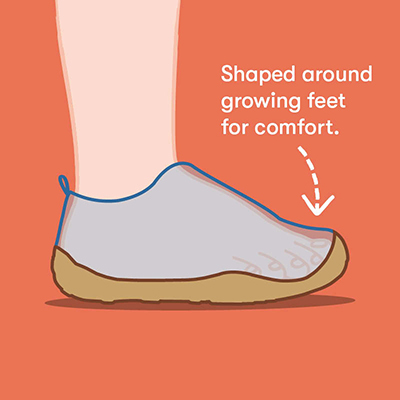
Children’s feet aren’t just smaller versions of adult feet. Baby feet can look chubby, almost square, and they can be wider at the toes and narrower at the heel as toddlers develop; all while growing surprisingly quickly. That’s why shape matters so much when it comes to comfort and development.
Our shoes are designed to follow the natural outline of a child’s foot, rather than squeezing feet into adult-like shapes. This gives toes room to spread naturally, helps avoid pressure points, and allows feet to settle into the shoe in a way that feels easy and supported - not tight or restrictive.
By designing with shape in mind our shoes can work with growing feet, not against them. This approach helps support natural movement as well as balance, alignment and posture contributing to the development of the whole body – not just the feet.
It might seem like an obvious detail, but it’s one that makes a big difference - and it’s been at the heart of how we design shoes for growing feet from the very beginning.
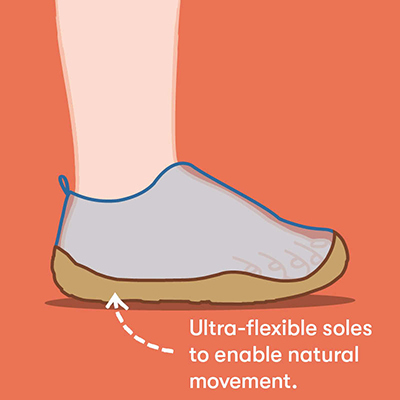
When children walk without shoes, their feet bend, flex and adapt with every step - and their footwear should allow for that same freedom of movement.
That’s why flexibility is such an important part of our design. Our ultra-flexible soles bend easily at the front of the foot, where movement naturally happens, helping kids move smoothly and comfortably as they explore and discover the world around them.
Carefully placed flex grooves play an important role here too. Guided by biomechanics, our grooves are positioned to support a natural heel-to-toe motion and encourage the foot to move as it’s designed to - whether little ones are crawling, cruising or taking those exciting first steps.
By allowing the shoe to move with the foot rather than against it, muscles can activate naturally, supporting balance, coordination and confidence as children grow. Movement feels easier and more intuitive, which can make a real difference when motor skills and self-assurance are still developing.
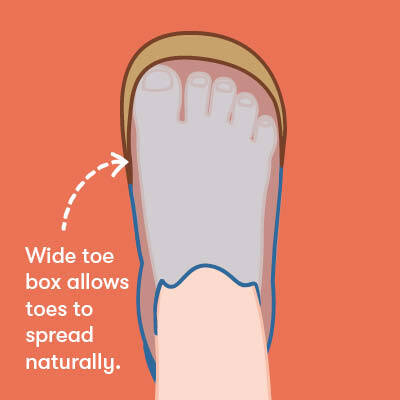
Toes play a much bigger role in movement than we often realise - especially in the early stages, when little ones are still learning how to balance and coordinate each step. They help provide stability, support weight distribution, and respond to the ground beneath them. For toes to do this well, they need enough space to move naturally.
That’s why generous toe room is a key part to how we design shoes. Our wider toe shape allows toes to sit flat, spread comfortably and engage as they should, rather than being scrunched together or held in place.
When toes are free to move, they create a broader, more stable base of support. This encourages better balance, helps reduce pressure across growing feet, and allows small muscles to work as intended. Children often feel more secure on their feet as a result, which can make movement feel easier and more confident.
This careful attention to toe space reflects years of understanding how children’s feet function, develop and stabilise over time. It’s a simple, thoughtful design choice, but one that quietly supports every step.
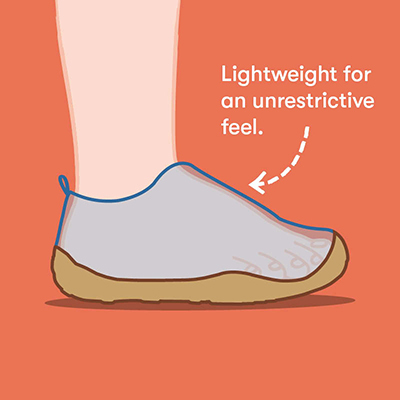
For young children, even small changes in shoe weight can have a noticeable effect. When shoes are heavy, every step requires more effort, which is something that can be particularly challenging for babies and toddlers who are still building strength and coordination.
Keeping shoes lightweight is a conscious design choice. Lighter footwear places less demand on growing legs and feet, helping children lift, place and move their feet without unnecessary resistance. This supports a more comfortable walking rhythm and can help reduce tiredness over the course of a busy day.
Our baby and toddler shoes are designed to feel unobtrusive on the foot, using carefully selected materials that keep weight to a minimum without compromising on support and protection where it matters. This allows children to focus on exploring, playing and practising their movement skills, rather than worrying about their footwear.
This focus on materials and how we construct our shoes comes from years of understanding how developing bodies move and adapt. By keeping shoes light and considered, we aim to support children as they gain confidence and independence at every stage.
We know that children’s shoes have a job to do beyond supporting movement and nurturing development. From busy playgrounds to everyday nursery wear, footwear needs to offer a level of protection that helps children feel secure and parents feel comfortable with what’s on their feet.
Our approach is shaped by understanding how much protection is helpful, and how much can start to interfere. Instead of rigid structures or heavy reinforcement, we design in carefully chosen features where they’re most useful. Protective toe and heel areas help guard against everyday knocks and scrapes, while soft cushioning around the ankles and underfoot adds comfort during longer or more active days. Secure, easy to adjust fastenings help keep shoes sitting well on the foot without needing to be tight or restrictive.
Each element is included with purpose, taking into account how children move at different stages and what their feet are likely to encounter throughout the day. The result is footwear that offers reassurance and durability, without compromising on flexibility or comfort.
It’s this informed balance drawn from experience and applied with care that underpins our approach to barefoot friendly shoes for everyday wear.