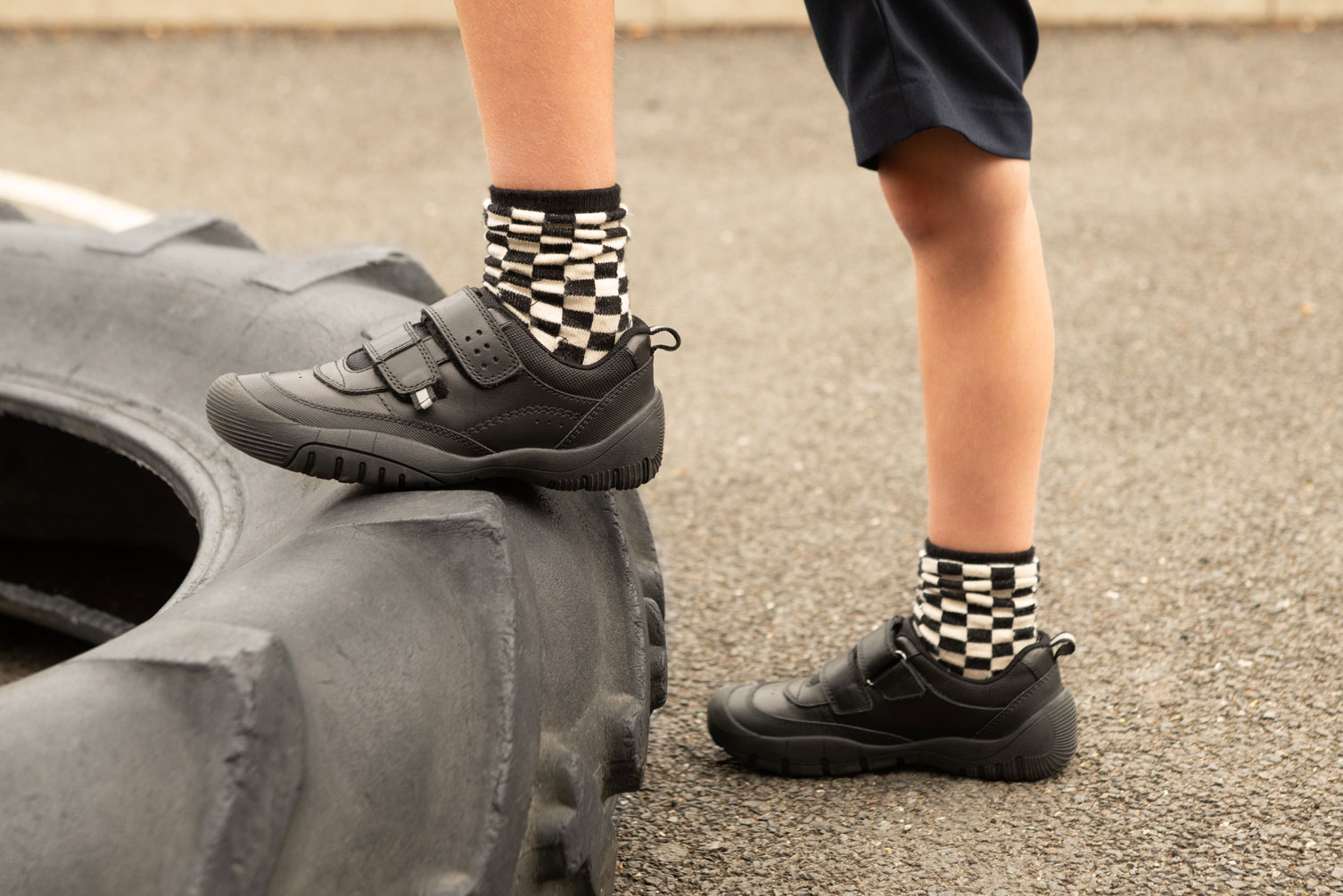
We know traction isn’t the first thing parents think about, but it’s working hard every time your child sprints, skids or launches themselves across the playground. Turn a shoe upside down and you’ll see a whole world of grooves and patterns - all designed to help little feet stay steady on shiny floors, drizzly pavements and gritty playgrounds.
Good grip gives children the confidence to move freely, without even thinking about it. So, exactly what is going on under our feet?
Traction is the grip a shoe has on the ground - the friction between the sole and the surface your child is walking on. It’s what helps children stay steady on their feet, whether they’re racing across the playground, walking to school on a drizzly morning or playing in the park.
For growing feet, good traction is more than a safety feature (or a snazzy looking footprint). Secure footing supports a healthy gait, helps children to develop confident balance and reduces the risk of posture-related discomfort.
In other words, when a shoe grips well, children can move naturally without tensing their muscles to hold themselves steady, which in turn supports comfort and healthy physical development.
Traction is usually measured on everyday surfaces you and your child are likely to come into contact with. This typically includes:
Even the best-designed shoes can’t fully counteract extreme slip hazards - for example, icy pavements or muddy slopes - but high-quality soles significantly reduce the risk of slips in typical daily conditions.
At Start-Rite, our shoes are rigorously tested using SATRA slip-resistance standards, one of the most respected global benchmarks for footwear safety. These tests simulate real-world movement on wet and dry surfaces, ensuring our shoes offer reliable grip where children need it most. We assess traction using methods that mirror the way children actually move - running, twisting, stopping suddenly and changing direction with boundless energy!
If you’re looking for our most durable, grip-focused school shoes, explore our toughest ever collection, designed to withstand active days and unpredictable weather.
Several design features work together to create strong, dependable grip:
Not all shoes are built for the same conditions, and while some shoes may be considered “all-rounders”, others are specialised for different times of year to ensure the best traction possible.
That’s one reason - apart from the temperature - why sandals aren’t recommended for wearing in winter, because the soles aren’t designed for grip in wet weather or frosty conditions. Choosing the best shoes for winter involves looking for that extra traction given by deeper treads.
Online hacks such as spraying hairspray on the sole, roughing it up with sandpaper or sticking duct tape underneath might seem like quick fixes, but in reality they’re not worth the hassle. In fact, they can:
Most importantly, these methods can leave children vulnerable to falls - especially on wet or smooth surfaces.
The safest and most effective way to ensure good traction is to choose shoes designed with the right treads from the start.
Many Start-Rite shoes feature our flex grooves – purposefully placed channels that help the sole to bend with the foot. These grooves increase surface contact, improving grip while supporting natural movement. For younger children learning to walk, this flexibility is especially important, helping them to build confidence with every step.
If your child spends a lot of time outdoors in muddy or uneven terrain, wellies with deep treads can offer extra stability. Our girls wellies and boys styles are designed with sturdy soles that help little explorers to stay upright on slippery ground so they can play out, and stay out for longer.
Author: Vista, published 28-05-2026.