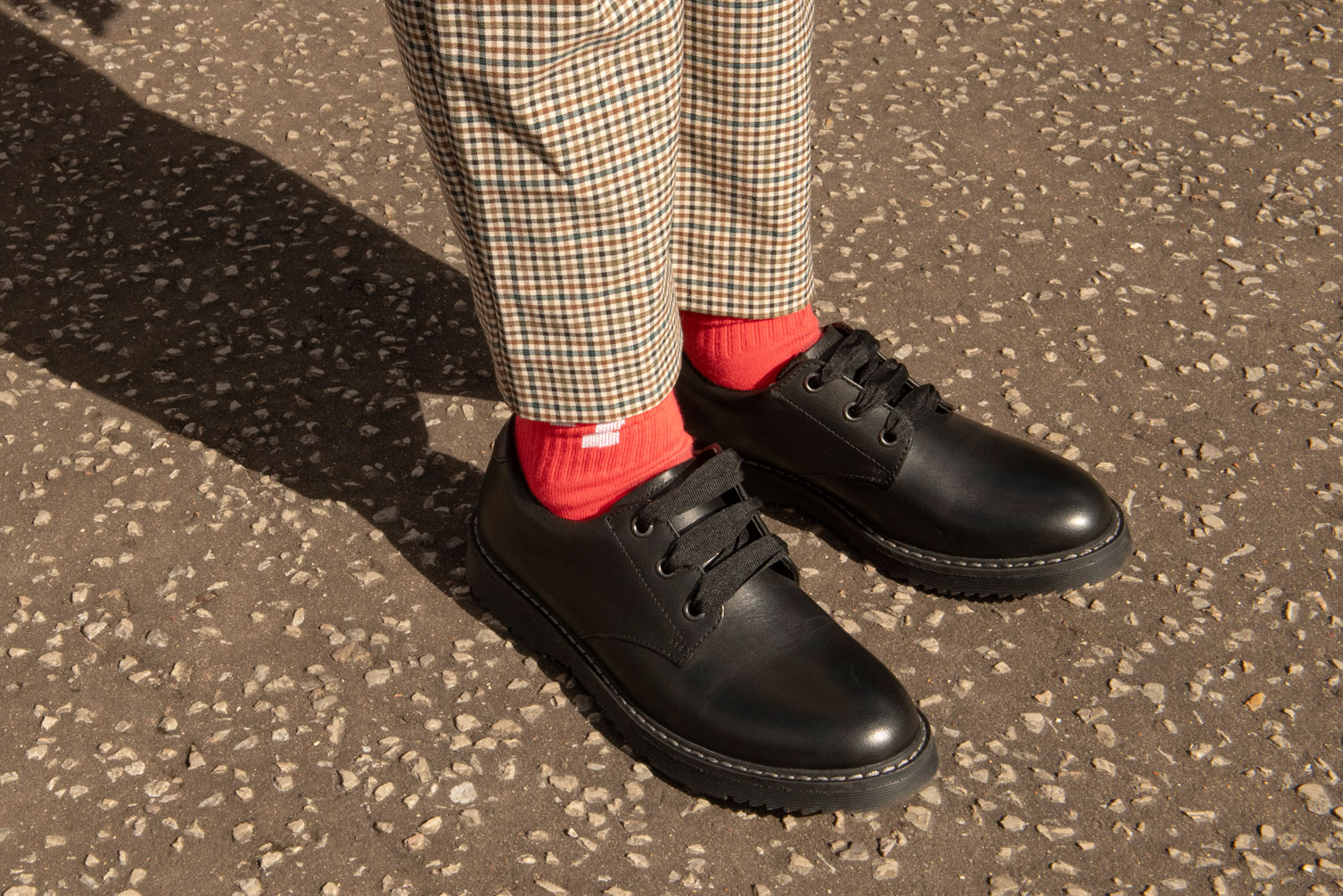
Not all shoe laces are made equal. The right pair can make busy mornings easier for both kids and parents, so it’s important to choose the right type.
Length is a key factor, as it can significantly impact your child’s comfort, safety and ability to learn to tie their own shoes independently - making it well worth taking the time to get it right.
In this blog, we discuss buying the right size shoe laces for your child’s shoes - a simple guide you can bookmark and come back to whenever you need it.
You might think you can simply reuse shoe laces from an old pair of shoes - after all, all shoe laces are basically the same, right?
Not quite. Beyond colour, there are two big differentiators between different shoe laces: shape and size.
Shape is usually easy to gauge. Some shoes - usually more formal styles like some school shoes – often use thin, round laces that look sleek and smart. Others may use flat laces, like those you probably have on your own trainers.
Size is a little bit more complicated, because it relies on a number of factors. Firstly, smaller shoes require smaller laces - which is why adult size shoe laces are likely to dwarf most children’s shoes.
Secondly, other factors can have an impact, such as eyelet spacing and the design of the shoe. For instance, a boot or high top trainer will likely need longer laces than a low-rise shoe.
You should also consider that different lacing styles can affect how long the laces need to be. Additionally, your child’s preferences about how much leftover lace you want to leave will also be important.
Important! Overly long shoe laces can be a trip hazard, especially for children, making it extra important to get a good fit.
You might think that the simplest way to determine the right lace length is to measure their existing laces, but this isn’t always the case. To know if this is a good idea, consider why you’re changing the laces:
Here at Start-Rite, we pride ourselves on the high quality and durability of all aspects of our shoes, including the laces. This means that for most primary school children and younger, shoes are much more likely to be outgrown than outworn – particularly babies’ or toddlers’ shoes that don’t get worn for such a long time.
However, since children’s feet grow more slowly as they get older, you may find their shoes show more signs of wear as they reach secondary school, especially for high traffic shoes like those they wear to school, if they’re not well looked after. These are possible candidates for lace replacement.
Generally speaking, shoe lace length can be determined by looking at the number of eyelets on your children’s shoes.
Shoe type |
Lace length |
Lace length |
Toddlers' shoes (2 or 3 eyelets) |
24" |
60cm |
Primary school children's shoes (3 to 5 eyelets) |
36" |
90cm |
Older children's dress shoes (adult sizes) |
24 to 36" |
60 to 90cm |
Older children's casual shoes (adult sizes) |
45 to 54" |
115 to 140cm |
If in doubt, another option is to use an adult shoe lace or a piece of string to lace your child’s shoes and tie them up as you would normally. Then you can measure how much excess there is and estimate how much shorter your child’s laces would need to be.
While shoe lace length isn’t something most of us give much thought to, getting it right helps to protect your child from slips, trips and falls when they’re out and about. It’s a vital part of the shoe that supports development and overall health - impressive for something so simple!
Author: Click, published 18-06-2026.