
It’s important to make the right decision for your children’s feet but sometimes you need a little help to know what to look for. If you’re unsure about fitting, we make it easy with our measure at home and check the fit guides, which will help to get the size and width accurate. Or if you need some advice on how to choosing the right pair of school shoes, read our what to look for when buying school shoes or top tips for looking after your shoes guides.
What to look for when buying school shoes
Choosing the right school shoes for your child can often seem like a daunting task. With a new school term comes the added pressure to find the perfect pair. Ease the Back to School stress with our tips for finding a pair that’s fit for purpose.
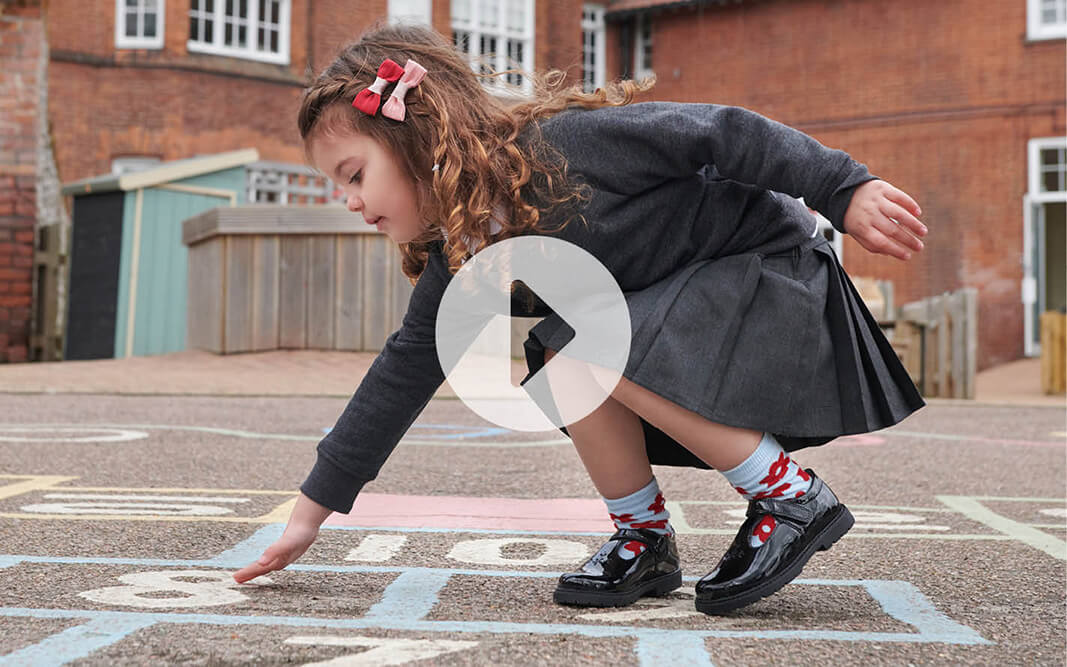
Niggle-free comfort
• Breathable materials help keep feet fresh and dry all day long
• Padded ankles and insoles provide cushioning and prevent rubbing
• Minimal seams reduce the number of areas that could rub the foot and cause blisters or discomfort
• Flexible rubber soles help feet move freely at each developmental stage
Intelligent protection
• Bumpers at the toe and heel protect leathers against scuffs
• Dyed through leather allows any minor scuffs and scraps to be polished out and keeps shoes looking like new for longer
• Vulcanised soles ensure shoes are hardwearing and will go the distance
• Nylon-bonded super strong threads ensure the stitching doesn’t break
• Shoes should have been rigorously tested from development through to manufacture
Child-specific precision fit
• Whole and half sizes will allow you to get a better fit for your child
• Measure your child’s feet to get the correct width fitting to ensure the most comfortable fit
• Child specific lasts are specifically developed for the shape and different growing stages of a child’s foot, and will support their ongoing healthy development
• Shoes with specifically designed built-in growing room not only fit well but last longer
Ready to buy? Take a look at our black school shoes, or shop school shoes by size.
Top tips for looking after and caring for school shoes
With hours on their feet at school, children’s school shoes are without doubt put through their paces. However, a little attention once in a while and use of the right footwear care products will keep them performing for longer. Follow these simple steps and get the most out of your school shoes:
• Make sure they fit properly – ill-fitting shoes will show signs of wear sooner, plus they are bad for your child’s development
• Protect leather shoes from splashes and stains using spray protectors, which are widely available to buy
• Dry school shoes carefully – fill wet shoes with crumpled paper and allow to dry naturally. Although tempting, never dry them on a radiator or by the fire as this can damage them further or shrink the leather
• Remove mud and grit whenever possible – this will prevent build up and increase the longevity of the shoes and help them looking good for longer
• Clean and polish regularly to keep the leather supple and protect and conceal scuffs and scratches
• Encourage your child to take off their shoes properly. This will help them keep their shape and last longer. A rip-tape fastening is great for kids who are in a rush.