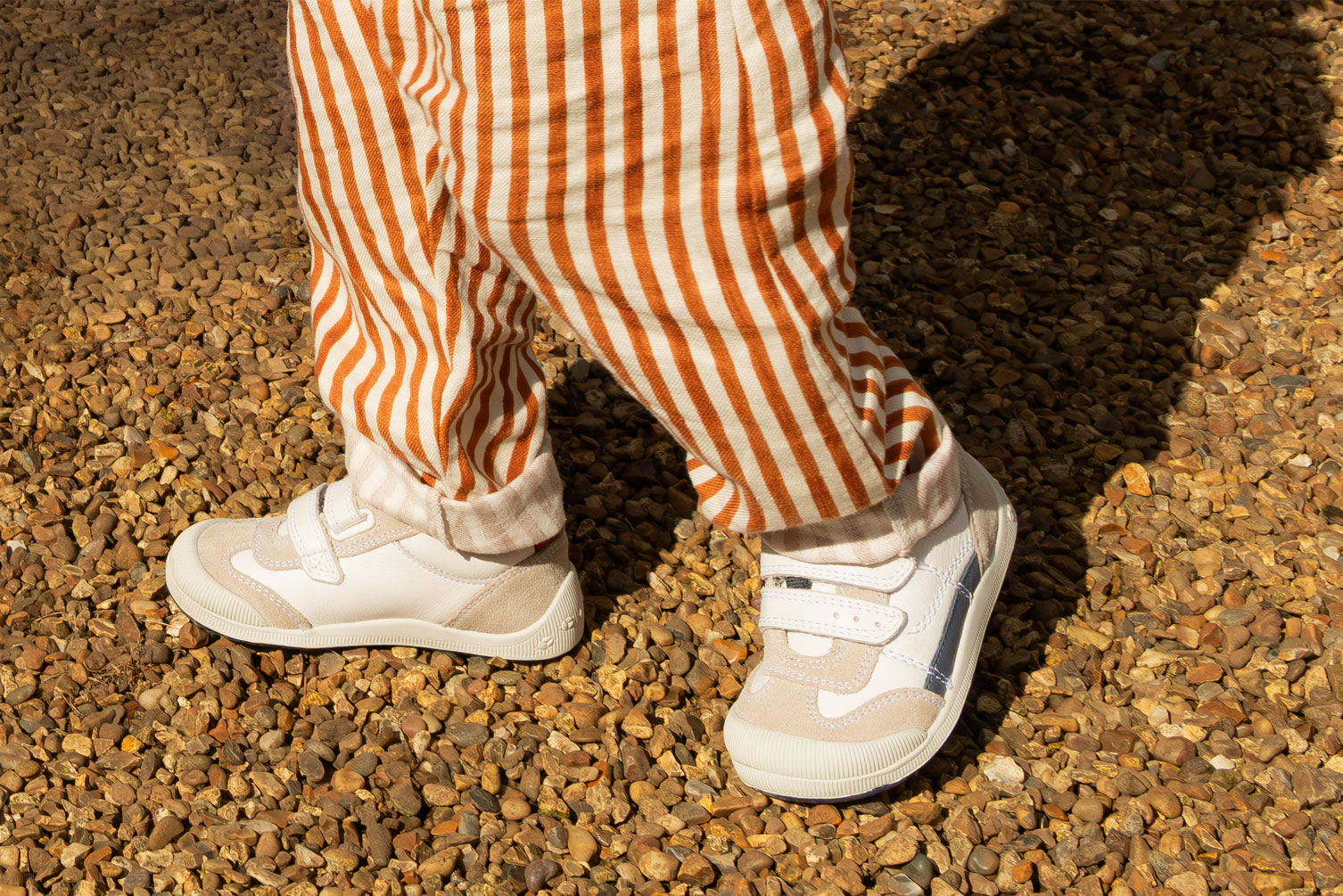
At Start‑Rite, we often say that children’s shoes are “never outworn, only outgrown”. As children grow and their adventures get bolder - from running and climbing to skidding, stomping and everything in between - the demands placed on their shoes naturally increase. All that daily activity can leave subtle signs of wear on well-loved, hard-working footwear.
School shoes tend to take the brunt of it - worn for five days a week, in all weather conditions, through playground games, walking to school, puddle‑jumping and the impromptu football match. So, it’s no surprise they’re often the first to wave the white flag.
Feet don’t grow in polite increments, so regular checks help to ensure shoes still fit properly. Measuring the feet of school-aged children every three to four months will make it easier to catch any growth spurts.
Now, let’s focus on the signs that a shoe has reached the end of its useful life - even if it still technically fits.
Once shoes start to give up, they can cause a surprising number of issues for little feet. These can include:
Sometimes, they can even become so uncomfortable children don’t feel like playing anymore. When the structure of a shoe begins to break down, the shoe simply can’t support and protect growing feet in the way it should anymore - which is why it’s so important to replace the shoes when this happens.
Here we share the most common indicators that a shoe is past its best.
The tread on a shoe is like the grip on a tyre - once it’s worn down, things get slippery. If the grooves on the bottom of the shoe are looking smooth, shiny or suspiciously flat, the shoe won’t provide the traction your child needs.
This is especially important for school shoes, which face everything from wet gravely playgrounds to polished wooden assembly halls. Flat treads can also mean the midsole (the bit that absorbs shock) is starting to compress, which reduces cushioning and comfort.
So, if the bottom of the shoe looks more like a pancake than a pattern, it’s time to consider a replacement.
A little wear on the heel is normal, but uneven wear is a red flag. If one side of the heel is significantly more worn than the other, it may suggest that the shoe is no longer supporting the foot correctly.
Uneven wear can also highlight gait issues - for example, rolling inwards or outwards - which can be made worse by shoes that have lost their structure. We always recommend replacing shoes showing this pattern, as worn heels can affect your child’s overall body alignment which can, over time, lead to all sorts of issues. It’s best to head it off in childhood to protect their future self.
Shoes should flex naturally with the foot, but if the sole has become excessively bendy, it may be a sign the materials are starting to wear down. When a shoe loses its original structure, it won’t offer the same level of support or stability it once did.
If the sole folds or twists with very little effort, it’s usually a good indication that the shoe is nearing the end of its life.
Some signs of wear are subtle. Others are… well, impossible to miss. When damage becomes visible, it’s usually a sign that the shoe has been working very hard for quite some time. If you spot any of the following, the shoe is definitely on its last legs:
Probably the biggest red flag of them all, pain is the body’s way of saying, “Something’s not right here.” If your child complains of sore heels, aching arches or discomfort, always check the fit and inspect the shoe for wear. Even if the shoe looks fine on the outside, the inside may be nearing the end of its useful life.
When you’re satisfied a shoe is ready for retirement, there are a couple of options to consider before tossing it in the bin and sending it off to landfill.
And when it’s time for a new pair, our latest collection is ready to be discovered, including girls boots and boys sandals.
Author: Vista, published 21-04-2026.